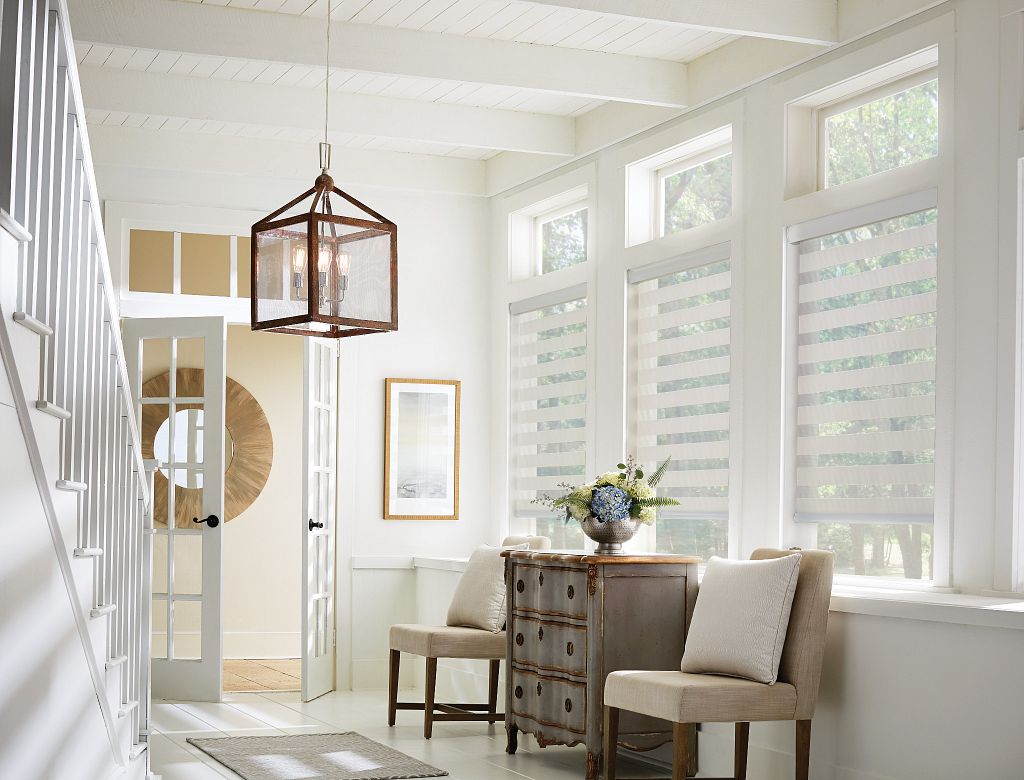
If you’re researching zebra shades and keep running into a pile of other names, you’re not alone. Online, you’ll see:
- Dual shades
- Zebra shades
- Banded shades
- Layered shades
- Transitional shades
So… are these five different window treatments, or did the window covering industry just get a little too creative with the thesaurus?
They’re essentially the same style of shade. The name changes by brand, but the way they work is very consistent.
And after helping homeowners choose window treatments for decades (we have 60+ years of combined window covering experience on our team), we’ve learned that clearing up the naming confusion is usually the first step to making a confident, no-pressure decision—especially if you’re ordering online and measuring yourself.
Quick answer: what are these shades?
These shades are often called zebra shades, but you’ll also see dual shades, banded shades, layered shades, and transitional shades depending on the brand.
Those layers alternate between:
- Sheer horizontal bands
- Solid (more opaque) fabric bands
When the layers line up one way, the sheer bands overlap—so you get soft natural light with daytime privacy.
Shift the layers slightly, and the solid bands overlap—giving you more privacy and better light control.
If you’ve ever wanted something between ‘wide open’ and ‘closed for business,’ this design is basically built for that.
Roller shade vs. zebra-style shade: what’s the difference?
Both are “roller-style,” but this banded, two-layer fabric lets you fine-tune light and privacy.
A traditional roller shade is usually one single fabric panel: up = open, down = covered. This style gives you more “in-between” control without needing two separate shades.
Why do zebra shades have so many different names?
Honestly: marketing and branding.
Different manufacturers chose different names for the same concept:
- Zebra shades: the stripes resemble a zebra pattern
- Dual shades: two layers of fabric work together
- Banded shades: describes the horizontal bands
- Layered shades: another way to say “two layers”
- Transitional shades: highlights the ability to shift between light and privacy
No matter what the label says, you’re typically looking at the same style of window shade.
Why zebra shades are popular with DIY homeowners
Most people don’t want “fully open” or “fully closed” all day.
This style is popular because they help you dial in the sweet spot—especially if you’re trying to balance comfort, glare, and privacy without making your room feel like a cave.
Common reasons homeowners choose zebra shades:
- Soft, natural light (without harsh glare)
- Daytime privacy without closing the room off
- Clean, modern look that works in a lot of homes
- Simple operation (great for everyday use)
- A strong option for wider windows
And from our side of the screen: we’ve seen zebra shades become a go-to because they’re easy to understand once you see the bands in action—which is why we focus on clear guidance, straightforward options, and DIY-friendly ordering.
Where do they work best?
Zebra shades are versatile, but they really shine in rooms where you want light + privacy at the same time.
- Living rooms
- Dining rooms
- Home offices
- Kitchens
- Sunrooms
- Some sliding doors (depending on the setup)
They’re especially helpful in bright, sunny spaces where glare is the enemy (yes, your TV screen will thank you).
Are zebra shades good for bedrooms?
Sometimes—but this is where expectations matter.
Zebra shades are typically designed for light filtering, not “pitch black at noon.” If you need:
- True blackout darkness (common for bedrooms)
- Maximum nighttime privacy (when interior lights are on)
…then zebra shades may not be your best standalone solution.
That said, with the right fabric choice and setup (and sometimes pairing with drapery), they can still work in many bedrooms.
Do zebra shades provide privacy at night?
Here’s the honest answer: zebra shades can provide privacy, but nighttime privacy depends on fabric choice and lighting.
When it’s dark outside and lights are on inside, silhouettes can happen with lighter, more sheer fabrics. If nighttime privacy is a top priority, choose a more opaque band option—or consider a different shade style for that room.
Can zebra shades be motorized?
Yes—motorized zebra shades are absolutely a thing.
Depending on the system, you can adjust them with:
- A remote
- A wall switch
- A smartphone app
- Voice assistants (like Alexa or Google)
If you’ve got tall windows, hard-to-reach spots, or you just want a smoother daily routine, motorization can be a practical upgrade.
DIY confidence check: how to order zebra shades online (without stress)
If you’re a value-driven homeowner ordering online, here’s the simple checklist we recommend:
- Measure carefully (width and height—twice, because windows love to humble us)
- Choose inside mount vs. outside mount based on depth and light gaps
- Pick your light goal: soft light, more privacy, or a balanced “everyday” option
- Decide if you want corded (cord loop), cordless or motorized operation
- If you’re unsure, ask questions before you order—because returns are nobody’s hobby
Final thought: ignore the label—focus on how you want the room to feel
Dual shades. Zebra shades. Banded shades.
Different names… same smart design.
The important part isn’t what a manufacturer calls it. It’s choosing the right window treatment for your comfort, privacy, and daily routine.
That’s what we help DIY homeowners do every day—without pressure, without jargon, and with the kind of practical recommendations you only get from people who’ve been in the window covering world for a long time.
Want to compare zebra shade options before you order?
If you’re wondering whether zebra shades make sense for your windows, we can help you compare options, understand fabric choices, and feel confident before you order.
Because at the end of the day, we’re here to make window shopping simple.
The BlindsOnline.com Team